
Thursday, April 4, 2013
WE'VE MOVED!
THANKS FOR STOPPING BY. WE'RE STILL BLOGGIN', JUST NOT AT THIS ADDRESS. CHECK OUT THE SUPER-RAD NEW CMS BLOG HERE!


Wednesday, March 20, 2013
Guide Gear Review - BCA Stash BC Pack
 |
| CMS Guide Rick Gaukel with the Stash BC in RMNP |
On a recent trip to the Valhallas in Canada, I was
exclusively using BCA's Stash BC Pack. As the assistant guide for this
week-long, lodge-based touring trip, I wasn't just carrying my own personal kit
each day but had my guide's gear as well. In addition to my own food, water,
gloves, extra layers, goggles, helmet, shovel, probe and saw, I was also
carrying a soft rescue sled, a snow survey kit, a 5'x8' tarp for emergency
shelter, a first aid kit, repair kit, radio and more gloves/layers
as backups for clients. This sounds like a lot and it is, but I was able to
pack everything neatly in its place in the Stash BC. I have no problems
packing for long day-trips in the backcountry with the Stash BC and thus it is my go-to day-touring pack.

I really like the shovel, probe and saw-specific sleeves in
the designated rescue pocket. It makes it easy to store and retrieve these
items when the bag is packed full. The goggle-pocket is a new feature for me. I
like being able to shove my sunglasses or goggles into this cozy pocket rather
than dealing with a goggle bag or worrying about scratching up the lenses.
 |
| BCA Stash BC looking good below Flattop in RMNP |
 | |||
| Rick ready to shred with his BCA Stash BC |
Have fun and be safe out there.
Andrew Councell
CMS Senior Guide
AMGA Certified Alpine Guide
AMGA Certified Rock Guide

www.coloradomountainschool.com
Acouncell@totalclimbing.com
1.800.836.4008
Friday, March 15, 2013
Finding the Joy in Skiing with the US Snowboard Team
Last week I had the pleasure
of skiing with a few members of the US Snowboard Halfpipe Team (Coach Rick
Bower and riders Matt Ladley, Gretchen Bleiler, and Ellery Hollingsworth). I
was invited by the Team Physician; Tom Hackett, M.D. from the Steadman Hawkins Clinic in
Vail, CO. Tom failed to mention we would be skiing with the team members (I was
skiing as I am terrible on a snowboard). I arrived at the base of the gondola for first
tracks at Vail to both a great surprise and opportunity. The next few hours
were inspirational and helped me rediscover the joy of skiing.
My initial apprehension at
riding with the team quickly dissipated as I realized they were all here to
have fun and enjoy a few hours on the mountain together. I followed the team
down our “warm up run” (Matt hit 68 mph). I was mesmerized by the ease and
fluidity with which the riders moved. I noticed how they would pop off any little
roller, bump or cat track. They did not do this to show off or draw attention
to themselves, but simply to have fun. They would throw tricks when
they wanted (which were quite impressive) but more noteworthy was that
they were simply enjoying the experience. They were just out having fun
with their friends.
Rick started a contest with
Matt to see who could do the best donut carve (make a full carving circle on
the snow). This inspired Matt and after they each pulled back side, switch
donut carves, I was utterly amazed. Gretchen and Ellery simply flowed down the
slopes and enjoyed making the entire mountain their play area. They hopped onto
the sides, pulled floating 360’s and found the most elegant lines to ride. They
did this all while chatting and catching up on life with one another. They were
amazing and inspiring to watch.
During the morning I found
myself letting go a bit. I went off the rollers, caught a bit of air off the
cat tracks (no 360’s for me), tried to complete a donut carve and kept a huge
smile on my face the entire time. I noticed Dr. Hackett enjoying the same
freedom on the mountain. We must have looked like a bunch of kids on a snow day
from school because that’s what it felt like!
It was inspirational to ride
with this group and I cannot thank them enough for helping me find my inner
child on the slopes again. I always enjoy skiing, but sometimes get caught up in
thoughts like, “I wish the snow was better.” Doug Coombs said it best, “There
is no such thing as bad snow, simply bad skiers.” It was great to take a step
back and remember that even if the snow is “bad” we are still sliding down the
hill with sticks on our feet and that is FUN.
I was able to ski fresh
powder at Vail the next weekend with my son Oz and a few of his buddies. It was
great to take the energy I got from skiing with the team to my son and his friends.
According to them we had the “BEST DAY EVER,” and I am inclined to agree. It
wasn’t simply because the conditions were great that we had "the best day ever," it
was because we were out there to have fun and enjoy the act of skiing together.
We had smiles on our faces for the entire weekend and enjoyed every aspect of
the skiing and camaraderie. The great attitude from the US Snowboard Team
members carried over to my next ski outing. I plan to carry it on for the rest
of the season and beyond! Here is a clip from "the best day ever!"
Have fun and be safe out
there,

AMGA Certified Rock Guide
CMS Senior Guide
1.800.836.4008
Tuesday, March 12, 2013
Marmot Minimilist Jacket - Guide Review
Marmot Women’s Minimalist Jacket
I
wore Marmot’s Minimalist Jacket every day this winter while ski guiding in
Hokkaido, Japan. Marmot uses GORE-TEX® with Paclite® Technology in the
jacket, which means that it is light, packs well and keeps you dry. On off-piste
days, I wore the Marmot Dena Jacket underneath the Minimalist – which is a
perfect combination on cold and snowy days...essentially everyday in Hokkaido. When skiing and guiding in the
backcountry, I can wear the Minimalist all day over a thin fleece layer. You might think that I would get hot skinning or breaking trail while wearing GORE-TEX®, but I do not. The Minimalist’s roomy
PitZips™ allow for excellent venting. The length of the jacket and an integrated draw-cord
hem also aide in venting and are great features so long as I remember to close off the drawcord when I am ready to ski
down in deep powder...essentially every run in
Hokkaido! The Minimalist Jacket also features a well-designed, adjustable
hood, which is essential when it is dumping snow. Lastly, the
Minimalist Jacket comes in seven colors, so there is always a perfect color for
everyone – even us ladies!
The
Minimalist is not only for super-snowy Japan. This will be my go-to
piece for springtime in Colorado, and also a great choice for hiking or
backpacking in rainy conditions. Thank you Marmot for creating this
functional jacket!

AMGA Certified Rock Instructor
CMS Guide
Colorado Mountain School
1.800.836.4008
nkizaki@totalclimbing.com
Thursday, January 17, 2013
Black Diamond Storm Headlamp - Guide Gear Review
 |
| Black Diamond Storm Headlamp |
Earlier this season in Rocky Mountain National Park, the Black Diamond Storm headlamp helped me recover lost equipment and get my first turns of the season. Here's my recount from an AIARE Level I Avalanche Course.
We had spent most of the day bringing all of our skills together
with a terrain tour in Tyndall Gorge. On our way back to the trail head we decided to set up one more companion rescue
drill. We selected a site in between
Dream and Nymph Lakes to do our beacon search. The students located and dug up the target in record time. We all got ready to ski
down the trail and a question arose about double burials. I demoed and discussed some methods. Time flies by and it's time to go meet
the rest of the group and get back to the classroom to wrap up the course.
 |
| AIARE Level I Students in RMNP |
Our
Avalanche Level 1 arrives back at the Colorado Mountain School after being in
the field. The guide team collects the
rentals and it dawns on me to check my pack for the extra beacon…it is not
there. I check my truck…not there
either. I now know that the beacon is
still under the snow surface in between Dream and Nymph Lakes. I grab my skis, skins, boots, and Black
Diamond Storm Head Lamp and whisk to Bear lake parking. By the time I arrive at the parking area there
is only one car and folks are walking to it all bundled up and staring at me. I toggle through the different levels of
lighting. Double tap and I get the red setting…no need for something brighter. Sure enough 100 lumens will do the trick
during a new moon and off I go up the trail disappearing from the whispering
folks shocked on my late ski decision.
I arrive at the site of where we were practicing. Boom baby! Here it is. I rip my skins, buckle my boots and away I go skiing trough the trees back to the parking
area. This happens to be my first real ski run of the season and it is lead by my BD Strom Headlamp. I arrive back to CMS
with the beacon and all is well. The BD Storm stays in my ski pack all of the time waiting for the next nighttime
adventure.

CMS Senior Guide
AMGA Certified Rock & Alpine Guide
1.800.836.4008
Wednesday, January 16, 2013
Black Diamond Cobra - Guide Review
 |
| Black Diamond Cobra Ice Tools |
The Cobras are a precision instrument. They have the greatest clearance of any Black Diamond Tools without sacrificing balance. Black Diamond has made these with a lightweight Carbon Fiber Shaft to provide damp, accurate swings. They feature a modular head design, so you can easily put on the adze when you are in the mountains and switch out to dueling hammers for your drytooling enjoyment.
 |
| Photo by Karsten Delap |
After years of abuse, these tools are still swinging great; a testament to the durability of the tool. The Cobras are a great tool for anything from the Ouray Ice Park to the North Buttress of Mount Hunter!
Eric Whewell
CMS Senior Guide
AMGA Certified Rock & Alpine Guide
www.totalclimbing.com
1.800.836.4008
Tuesday, January 15, 2013
Guide Gear Review: Scarpa Maestrale RS
 |
| The Scarpa Maestrale RS & Gea RS |
When I saw the Scarpa Maestrale RS at last winters OR show I
was intrigued. I loved touring in the original orange Maestrale, but always
wanted a bit more behind the boot for the skis I use (95-118mm underfoot). I
was able to obtain a pair of these prized boots in November, but had to wait
until December to get the boots out into the field. So far I have used the Maestrales on many short tours, a few long tours and for eight days at the
resort. Overall the new Maestrale RS is a great step forward in the high
performance AT world.
 |
| These guides know something...Scarpa boots rock! |
The absolute best feature of all Scarpas is that they come with real Intuition liners. The new RS Maestrale comes with the new Intuition Pro Flex RS liners. This liner has more padding than the older version and the tongue is stiff enough on the outside so you do not get shin bang. As always remember to get your liners molded by a professional (or be really patient at home) and have the boots shell sized before you purchase. The next feature you
notice is the weight. The RS is only 40 grams heavier (7lbs 4oz per pair,
actual weight on a scale in size 27 vs 7lbs 2oz) than the original Maestrale
and comes in at a 120 flex instead of a 100. This difference in stiffness is
marked and really appreciated. Here's a video of the RS in action.
So what terrain is this boot set up for? It has become my go
to boot for short and long tours as it meets all my demands for a lightweight,
stiff boot with great range of motion (Scarpa claims 37 degrees of motion). I
can't say if there really is 37 degrees of motion, but the boot range is greater
than my body’s range of motion. I have been riding skis that are 105mm and
118mm underfoot and the boots drive the skis with ease. I have skied crud, powder,
and groomed and these boots tackled all
snow types. I would not recommend this boot if you exclusively ski the area,
but they are fine if you are occasionally visiting them. Overall these are awesome.

AMGA Certified Rock Guide
 |
| CMS Guide Mike Soucy enjoying the RS on Vail Pass, CO |
Yes, I know it’s a little late, but I was waiting for more
snow before reviewing these boots. Finally, after receiving said snow, I
decided to take them out for a spin during our Christmas storm and report back.
The Scarpa Maestrale RS is the bootmaker’s latest edition to
the do-it-all lightweight charger category. It benefits from a low profile
shell with tech compatibility, an Intuition brand moldable liner, and a tour
mode that promotes your natural stride.
Out of the box, I was immediately impressed by the weight of
these boots and the flashy shell design. I was moderately impressed by the
color scheme. Then they sat for a few weeks while we rode our mountain
bikes into December.
After finally logging a few days in them, I must say that
I’m impressed. Their light weight design, coupled with the cuff’s range of motion in
walk mode promotes comfort while touring. Lock them down, and they provide a
reliable, progressive flex that can push the biggest of boards. Perfect for
long ski tours through rugged and diverse terrain. Here's a quick video of CMS guides testing out their new RS setups.
The hardware appears durable and easily repairable. One
minor point of criticism is that Scarpa consistently chooses to omit the buckle
“catches” that keep things tight while climbing with the boot loosened. Easily
retrofittable, but this would be a welcome addition.
I’m curious to see how I adjust to the shell’s tongue
opening. It reminds me of the door on an expensive Italian sports car.
Initially, it takes some effort to open up the cuff, as well as remove the
liner. However, I believe that this design improves the forward flex of the
boot, so I’m open to it.
If you’re an aggressive skier, looking for an energy
efficient, high performance boot, this could be your winner. It would also help
if you have low volume feet. Head over to your local boot fitter and give them
a try.
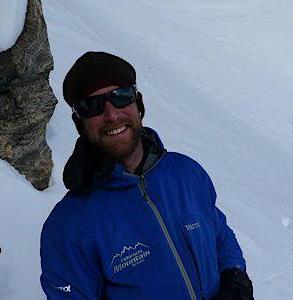
IFMGA Certified Mountain Guide
Thursday, December 6, 2012
Guide Gear Review: Black Diamond Spinner Leash
 |
| Mike Lewis utilizing the BD Spinner Leash on All Mixed Up in Rocky Mountain National Park - Photo by Rainbow Weinstock |
There I was...climbing solo on the Direct Polish Glacier on Aconcagua in Argentina. The crux consists of about 3,000' of Alpine Ice 3 without ledges or breaks in the angle. Dropping an ice tool in this situation is not an option. I tied some cordellette to the bottom of my tools and clipped this into my harness. I felt reassured and much safer knowing that I could not drop my ice tools this time. Now enter the Black Diamond Spinner Leash.
 |
| BD Spinner Leash |
The Spinner Leash is standard gear for me when climbing ice. Whether it is ice-cragging or multi-pitch alpine ice - I am using the Spinner Leash. These days many folks are going “leashless” in order to have more freedom of movement and natural motion. I have found that with the Spinner Leash I can still have the freedom of movement I desire but the peace of my mind that I am not going to drop a tool mid climb.
I have found that the Spinner Leash rarely gets in the way: in fact, most of
the time I forget it is attached. I can switch my tools from hand to hand
and the swivel keeps the leashes organized. The stretchy bungee inside the
black webbing keeps slack from building up that would accumulate if you used a cordalette leash. The carabiners that clip into the bottom of
the tools are small enough that they do not get in the way.
 |
| Mike ready to climb with the BD Spinner Leash |
Overall, I REALLY like the Spinner Leash and recommend it to any ice or alpine climber, beginner to expert. Why have the anxiety of dropping your tools when you can have the safety of a leash that does not compromise the freedom of going leashless? Enjoy!
Have fun and be safe out there,
Mike

AMGA Certified Rock Guide
Colorado Mountain School Mountain Guide
1.800.836.4008
Tuesday, November 20, 2012
Guide Gear Review: Marmot Zeus Jacket
 |
| Marmot Zeus Jacket |
Marmot describes the Zeus as a city jacket but a lot of us
wear it both on outdoor adventures and while visiting the local barista. On some
recent camping trips I put the Zeus on when I emerged from my sleeping bag and
again as soon as the sun went down. This jacket is so light that I forget I am wearing it. It is like wearing warm air. It has been an excellent layer for fall rock
climbing (read: belaying). It has been with me in Red Rocks, Moab, and Eldo
this year and soon it will find its way into my ski pack!
 |
| The Zeus keeping CMS Guide Eric Whewell warm in Rocky Mountain National Park |
Part of the Zeus’ comfort comes from it feeling lighter than your baseball cap and part of the comfort comes from its excellent fit. It is long enough in the arms to encourage all kinds of movement, snug and cozy but not tight around the neck, and just right in the torso whether layered over a t-shirt or a hoody. Many folks also appreciate that the Zeus is not overly bulky and thus avoids the “Michelin Man” look.
 |
| Eric Whewell (CMS Senior Guide) in RMNP |
 |
| CMS Guides on Spearhead. Eric (center) is rockin the Zeus. |
Other perks of the jacket are: the zippered hand-warmer
pockets, the neck-warmer effect of the high collar and the lack of bells and whistles...it comes in lots of cool colors too.
The only real complaint about the Zeus comes from my other
jackets: they are lonely. Now, the only question is: is it wrong to take a down
jacket to a tropical paradise like Thailand? I plan to find out this week.
Mark Hammond
CMS Senior Guide
Colorado Mountain School
1.800.836.4008 x 3
info@totalclimbing.com
Tuesday, November 13, 2012
Guide Gear Review: Black Diamond Vector Helmet Review
I
have long awaited the arrival of the new Black Diamond Vector Helmet. I like to
carry as little weight up the hill as possible and since my LG/XL Vector
weighs in at a trim 8.5 ounces (SM/MD 8.1 ounces) I have no excuse to
leave my helmet at home.
 |
| the new Vector from blackdiamondequipment.com |
There
are lots of technical components to the Vector: in-mold headlamp clips,
ratcheting helmet adjustment, tuck away suspension (for packing), lots of
ventilation, and cold-molded EPS foam with polycarbonate shell. On top of all these technical points, the
Vector passes the all-day comfort test with ease.
A
good friend and regular climbing partner of mine named Juan laid it out for me a few weeks ago: he said, “Mike, you are to always bring your helmet for any
projects in Eldo.” Juan and I had been working on the climb “Surf’s
Up.” Sure enough the next time we went out I brought the Vector along to test-drive. Bottom line: we both dug it.
 |
| Juan rockin the Vector Helmet in Eldo |
The
long and short is this: the Vector is a lightweight helmet that is comfortable,
looks good, packs easily and most importantly is going to protect your
domepiece. Fear not ladies, there is also a
Women's Model.
Have fun and be safe out there.
CMS Senior Guide
Colorado Mountain School
1.800.836.4008
totalclimbing.com
Subscribe to:
Posts (Atom)